
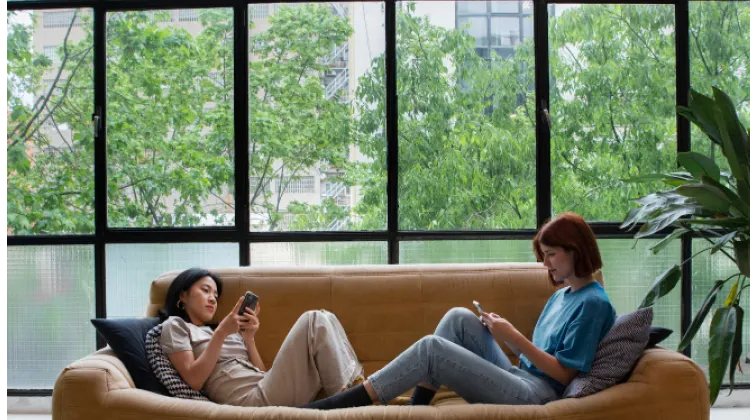
• Immediate Savings: Professionally installed film can reduce cooling costs by up to 30%.
• Year-Round Utility: Modern films act as thermal barriers, rejecting solar heat in summer and helping retain interior warmth during Midwest winters.
• High-Tech Defense: Nano-ceramic technology can block up to 80% of solar heat without compromising your view or natural light.
• Environmental Impact: Reducing HVAC reliance is one of the most sustainable, low-profile energy-efficient window upgrades available today.
Stop Fighting the Sun: Reclaim Your Home’s Comfort
Living in the Midwest means navigating a climate of extremes. One week we’re bracing for a polar vortex, and the next, we’re retreating indoors to escape a humidity-heavy heatwave. In these conditions, our windows act like thermal leaks in our home’s defense. While many assume that total window replacement is the only path to efficiency—a project that can cost tens of thousands—there is a more sophisticated, cost-effective alternative.
Window tinting in the Midwest has evolved into a high-performance strategy for achieving massive home energy savings with tinted windows. By applying an advanced film to your existing glass, you fundamentally transform how your home interacts with the elements. At Midwest Window Film Solutions, we turn “energy-leaking” glass into high-efficiency thermal barriers that keep your money in your pocket and the heat outside.
Section 1: The Modern Shield—Technology Beyond the “Dark”
The leap from “old-school” tint to modern window film for energy efficiency is like the jump from a rotary phone to a smartphone. Today’s technology is smarter, thinner, and significantly more effective at managing the solar spectrum.
[Callout: The Physics of Savings — Traditional windows absorb solar energy and radiate it into your home. Modern films act as a mirror for the infrared spectrum, reflecting energy away before it ever crosses your threshold.]
The Evolution of Film Technology:
- Spectrally Selective Films: These “smart” films allow visible light to pass through so your home stays bright, but they surgically filter out the infrared heat and UV rays that drive up utility bills.
- Nano-Ceramic Innovation: Utilizing non-conductive ceramic particles, these films offer incredible heat rejection without interfering with electronics or creating a “mirrored” commercial look.
- Low-E Enhancements: Premium films are engineered to work year-round, reflecting interior heat back into the room during those long, sub-zero Midwest winters.
Section 2: Understanding the Core Solution
When we discuss window tinting energy efficiency, we focus on the Solar Heat Gain Coefficient (SHGC). This metric determines how much solar radiation enters your sanctuary. By lowering this number, we significantly decrease the “greenhouse effect” in your living room.
How Professional Installation Maximizes Efficiency
A DIY kit lacks the industrial-grade thermal bonding required for true efficiency. At Midwest Window Film Solutions, our precision-engineered installation ensures:
- Edge-to-Edge Seals: Eliminating “light gaps” ensures there are no thermal leaks.
- Thermal Stress Analysis: We analyze your glass type (single vs. dual-pane) to ensure the film won’t cause cracks in the unit.
- Enduring Performance: Our films are designed to maintain their energy-saving properties for 15 to 20 years.
[Expert Quote: “Window replacement can take decades to pay for itself. Professionally installed window film, however, often sees a full return on investment in energy savings within 2 to 4 years.” — Midwest Window Film Solutions Specialist]
Section 3: Solving the “Midwest Climate” Dilemma
1. The “AC Marathon”
If your air conditioner runs non-stop in July, you have a heat gain problem. Reduce cooling costs with window tint by blocking up to 80% of solar energy before it even triggers your thermostat.
2. Eliminating Hot and Cold Spots
Does your sunroom feel like a sauna while the rest of the house is freezing? Energy-efficient window tinting balances the temperature throughout the house, making every square foot of your home livable regardless of the sun’s position.
3. Fading and Interior Preservation
Efficiency isn’t just about the power bill; it’s about the “efficiency of investment.” UV rays are the primary culprit behind the fading of hardwood and upholstery. Our films block 99% of UV rays, acting as a permanent sunscreen for your home’s interior design.
Section 4: The Customer Experience—The Specialist Difference
Choosing an installer is as vital as choosing the film. There is a massive gap between a generic “tinter” and an energy-efficiency specialist. We don’t just “stick film on glass”; we perform a site audit to identify where your home is losing the most energy.
What you gain with Midwest Window Film Solutions:
- Customized Site Audit: We recommend films based on your home’s orientation and window type.
- Architectural Aesthetics: We ensure the film enhances—rather than distracts from—your home’s curb appeal.
- Clean-Room Standards: Our installers respect your home, leaving behind nothing but comfort and a crystal-clear view.
[Callout: The Sustainability Factor — Residential window film is one of the most ‘green’ upgrades you can make, as it upgrades existing glass rather than sending old windows to a landfill.]
Section 5: Midwest Window Film Solutions Services
We are proud to be the region’s top provider for comprehensive glass protection:
- Residential Window Tinting: The gold standard for energy-efficient home windows.
- Commercial Window Film: Slashing overhead and improving tenant comfort for local businesses.
- Automotive Window Tinting: Precision-fit heat rejection for the road.
- Safety & Security Films: Providing a “shatter-proof” layer to protect against storms and intruders.
Section 6: Making It Easy to Get Started
Achieving home energy savings with tinted windows should be a seamless experience. We’ve refined our process to be as transparent as our materials:
- Free Site Evaluation: We measure and analyze your windows’ current thermal performance.
- Product Demonstration: See the films in person and feel the heat rejection for yourself.
- Professional Installation: Most projects are completed in a single day with zero disruption to your routine.
[Tip: Check for Energy Rebates! — Many Midwest utility companies offer incentives for ‘Building Envelope’ upgrades. We can provide the technical data you need to apply for these savings!]
Section 7: Expert Tips for Longevity
[Tip: Curing and Care — After installation, allow 30 days for the film to fully cure. After that, use a soft microfiber cloth and ammonia-free cleaner (like mild dish soap) to preserve the scratch-resistant hard coat.]
- Prioritize Exposure: Focus on south and west-facing windows first for the highest ROI.
- Don’t Fear the Dark: You can achieve massive energy savings with films that are almost entirely clear.
- Demand NFRC Certification: Ensure your film’s performance is backed by the National Fenestration Rating Council.
Conclusion: A Smarter, Greener Sanctuary
When homeowners ask, “does window tinting save energy?” the answer is a resounding yes. It is one of the most effective, least invasive energy-efficient window upgrades available today. By choosing Midwest Window Film Solutions, you aren’t just tinting your glass; you are investing in a more comfortable, protected, and financially efficient future for your home.
Ready to reclaim your comfort?
[Contact Midwest Window Film Solutions today to request a free quote and schedule your energy audit!]
Frequently Asked Questions
Does tinting home windows save energy?
Yes. By reflecting a significant portion of solar heat, window tinting reduces the strain on your HVAC system. Homeowners typically see a reduction in cooling costs of up to 30% during the summer months.
What are the disadvantages of tinting your house windows?
The “negatives” are typically only found in low-quality DIY kits, which can bubble or peel. When professionally installed, the only “disadvantage” is a brief 30-day curing period where you must avoid cleaning the windows.
Is it worth tinting your house windows? Why don’t people tint their house windows?
It is highly worth it for the UV protection and energy savings alone. Many people hesitate because they assume it will make their house look like a dark office building, but modern residential films are designed to be nearly invisible.
Why do cops care so much about window tint?
Police interest is strictly regarding automotive tint for driver visibility and safety. These laws have zero impact on your home, where you are free to choose any level of tint for your privacy and protection.
Does window tinting reduce heat in a house?
Yes, high-performance films can reject up to 80% of solar energy. This stops the “greenhouse effect” from overheating your home, even on the most humid Midwest afternoons.
What are the negatives of black windows?
Very dark films can absorb significant heat. At Midwest Window Film Solutions, we ensure your film is “safe” for your specific glass type (like dual-pane IGUs) to prevent thermal stress cracks.
Can you see through tinted house windows at night?
If it is dark outside and lights are on inside, you can see out, but the privacy effect is reversed. For total nighttime privacy, we recommend our frosted or decorative films.
How often should you tint your windows?
For most homeowners, this is a one-time upgrade. High-quality professional films are designed to last 15 to 20 years without losing their protective or energy-saving qualities.
How long does home window tinting last?
With professional installation, expect 20 years of performance. Our premium films are scratch-resistant and UV-stabilized to ensure they look and perform like new for decades.
Does window tint lower resale value? What percent should I tint my house windows?
It actually improves resale value by boosting the home’s energy rating. Most Midwest homeowners prefer a “neutral” tint of 35% to 50% for the best balance of performance and aesthetics.
What are the cons of window tinting?
The initial cost is the primary factor, but when weighed against the protection of your home’s interior and the ongoing energy savings, the “pros” almost always outweigh the investment.
Does window tinting make your house dark?
Not necessarily. Spectrally selective films block heat and UV rays while allowing almost all visible light to pass through, keeping your home bright and airy.